The Union Jack is a rather complicated flag. It is a compilation of the flags of England, Scotland, and Northern Ireland, which, as I talked about in the previous post, comprise the United Kingdom.
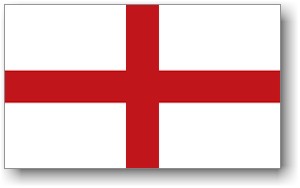
Photo from www.picturesofengland.com
.svg)
Photo from www.wikipedia.org
The flag of Scotland, or St Andrew's Cross/Saltire.
When King James VI of Scotland inherited the English and Irish thrones and became James I of England and Ireland as well, he combined the flags of England and Scotland and created what he called the flag of Britain.
.svg/1000px-Union_flag_1606_(Kings_Colors).svg.png)
Photo from www.wikipedia.org
Ta-da! How clever of him.
This became the national flag from 1606-1801. In 1801, they finally added the Irish flag to the mix, which was only fair considering Ireland had been part of the nation since 1603.

Photo from www.wikipedia.org
The flag of the Kingdom of Ireland, or St Patrick's Cross. For the vexillology purist, St Patrick's Saltire.
So with all three flags combined, voilà! The modern Union Jack sprang into being.
.svg/1000px-Flag_of_the_United_Kingdom_(3-5).svg.png)
Photo from www.wikipedia.org

No comments:
Post a Comment