Monday, July 21, 2014

Say Hwaet?

Shakespeare did not write in Old English.

Shakespeare wrote in Early Modern English. In fact, the proper term for the Renaissance is “Early Modern,” because there were lots and lots of renaissances over the course of several centuries. A renaissance is a “rebirth” of classical knowledge. It means that people are suddenly really interested in what the Romans and Greeks were doing, the local monasteries clean up their act like frat boys the night before Moms’ Weekend, and everyone starts using Latin a lot more. The Renaissance hit its height in the 16th century, but arguably spanned from the 14th all the way to the 17th century. To distinguish this über-renaissance from the rest of the renaissances, historians refer to this period as Early Modern.

So if Shakespeare is Early Modern, what constitutes Old English?

Let me give you a visual and an audio. If you click the link below each passage, it will take you to a YouTube video where you can hear the words pronounced. (Trust me, you’ll want to do this—Middle English may look normal-ish, but it sure doesn’t sound like it.)

4th to 11th century: Old English, also known as Anglo-Saxon
hƿæt ƿe ȝardena in ȝeardaȝum,
þeodcyninȝa, þrym ȝefrunon,
hu ða æþelinȝas ellen fremedon.
oft scyld scefinȝ sceaþena
þreatum, moneȝum mæȝþum, meodosetla ofteah,
eȝsode eorlas. syððan ærest ƿearð
feasceaft funden, he þæs frofre ȝebad,
ƿeox under ƿolcnum, ƿeorðmyndum þah,
oðþæt him æȝhƿylc þara ymbsittendra
ofer hronrade hyran scolde,
ȝomban ȝyldan. þæt ƿæs ȝod cyninȝ.
Just to clarify, the ȝ and ƿ should blend in size-wise with the rest of the text, but unfortunately there is no Unicode for these runes, so I had to copy-paste pictures of them into the text rather than be able to type them or insert them as symbols.

11th to early 15th century: Middle English
Whan that Aprill with his shoures soote
The drought of March hath perced to the roote
And bathed every veyne in swich licour,
Of which vertu engendred is the flour;
Whan Zephirus eek with his sweete breeth
Inspired hath in every holt and heeth
The tendre croppes, and the yonge sonne
Hath in the Ram his halfe cours yronne,
And smale foweles maken melodye,
That slepen al the nyght with open eye-
So priketh hem Nature in hir corages;
Thanne longen folk to goon on pilgrimages
And palmeres for to seken straunge strondes
To ferne halwes, kowthe in sondry londes;
And specially from every shires ende
Of Engelond, to Caunterbury they wende,
The hooly blisful martir for to seke
That hem hath holpen, whan that they were seeke.

Late 15th to 17th century: Early Modern English
To be thus, is nothing, but to be ſafely thus:
Our feares in Banquo ſtick deep,
And in his Royaltie of Nature reigns that
Which would be fear’d. ’Tis much he dares,
And to that dauntleſs temper of his Minde,
He hath a Wiſdom, that doth Guide his Valour,
To act in ſafety. There is none but he
Whoſe being I do fear, and under him
My Genius is rebuked, as it is said
Mark Anthonies was by Ceſars.
The weird squiggle (ſ) that looks like a fancy letter 'f' is an 's'; our normal letter 's' was used at the end of words, and the squiggle was used at the beginning and in the middle of words. And yes, that’s Ian McKellan. Judy Dench plays Lady Macbeth in the same Royal Shakespeare Company production.

The biggest difference between Middle English and Early Modern English, in my opinion, is the way in which words were pronounced. Middle English is spoken farther back in the mouth and sounds more German; Early Modern is pronounced almost like we pronounce words now. To get a really accurate idea of what Shakespeare's accent sounded like (even better than Gandalf can do), here's a neat YouTube video.

I stole parts of this post from a blog I had a few years ago. I figured the information had not changed and there was no point in tracking down completely different quotations and video links. So if you're having a sense of déjà vu, that's why.

What's My Line?


As I mentioned in my initial post, I will be pursuing a doctorate in English. The study of English language and literature encompasses several continents and fifteen centuries. So to be a little more specific, I will be studying Medieval English literature with an emphasis on insular romances and ballads.

Um, what?

I did my Bachelor's in English (general literature) and my Master's in Medieval Studies (which means a combination of literature, history, theology ... basically anything to do with the Middle Ages).

The dates of the Middle Ages are a little fluid. It started earlier and ended later in England than it did in, say, Italy. Mostly this has to do with the fall of the Roman Empire and the start of the Renaissance. So for the purpose of this blog, when I talk about the Middle Ages I'm referring to a period from roughly 500 - 1500 C.E.* Basically from the retreat of the Roman Army from the British Isles to the start of the Tudor reign. So no Henry VIII for me. 

Insular means that I will be looking at stuff written in the British Isles, not on the Continent. And it will be in Middle English. More on what constitutes Middle English (verses Old or Early Modern English) later. 

What I do:


What I do NOT do:

Photo from www.medievalarchives.com

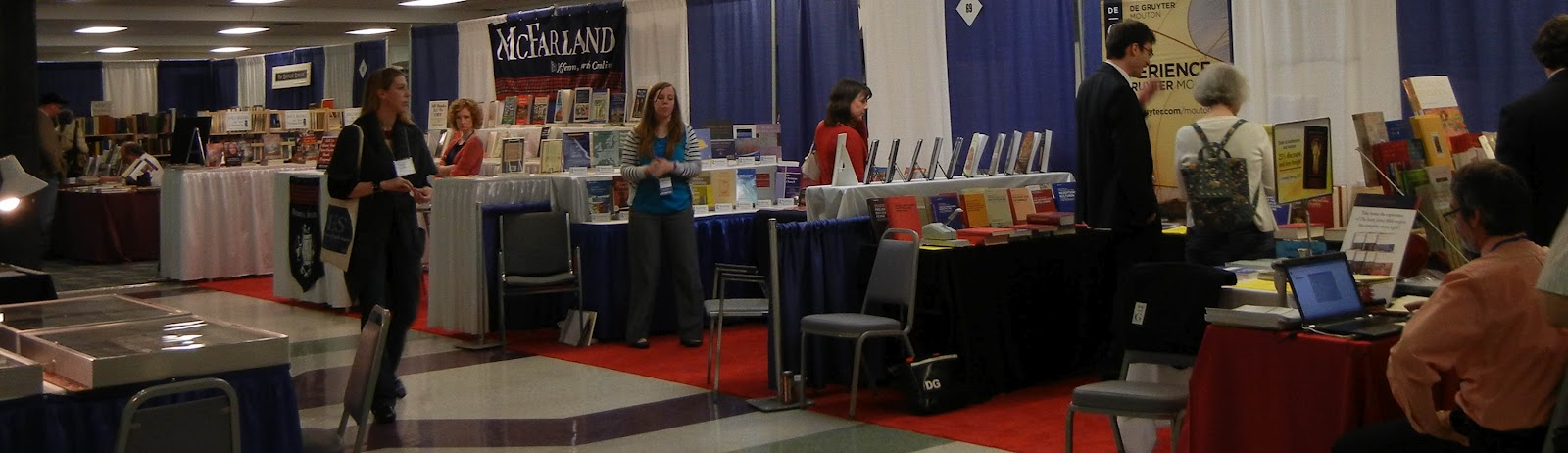
Nope. Do not do.  So when I say I am attending a Medieval conference, this is what I'm doing:

Photo from www.medievalists.net

Photo from www.patriciabracewell.com

Photos from the International Medieval Congress at Western Michigan University

NOT this:

Photo from www.haerr.blogspot.com

Not to take away from people who enjoy doing that sort of thing; it's just not my cup of tea. Or what I'm paying tuition for. 


*C.E. stands for Common Era. It is exactly the same as A.D., and B.C.E. (Before Common Era) is exactly the same as B.C. The difference is that A.D. and B.C. are strictly Christian (Anno Domini, the Year of Our Lord, and Before Christ) and C.E. and B.C.E. are a little more secular, and therefore viewed by many historians, publishers, etc. as more professional.

Tuesday, July 15, 2014

Fun with Flags

"Flags: you gotta know how to hold 'em, you gotta know how to fold 'em." -- Sheldon Cooper, The Big Bang Theory

The Union Jack is a rather complicated flag. It is a compilation of the flags of England, Scotland, and Northern Ireland, which, as I talked about in the previous post, comprise the United Kingdom.
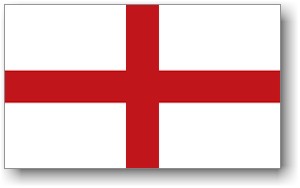
Photo from www.picturesofengland.com

The flag of England, also called St George's Cross.

Photo from www.wikipedia.org

The flag of Scotland, or St Andrew's Cross/Saltire.

When King James VI of Scotland inherited the English and Irish thrones and became James I of England and Ireland as well, he combined the flags of England and Scotland and created what he called the flag of Britain.

Photo from www.wikipedia.org

Ta-da! How clever of him.

This became the national flag from 1606-1801. In 1801, they finally added the Irish flag to the mix, which was only fair considering Ireland had been part of the nation since 1603.


Photo from www.wikipedia.org

The flag of the Kingdom of Ireland, or St Patrick's Cross. For the vexillology purist, St Patrick's Saltire.


So with all three flags combined, voilà! The modern Union Jack sprang into being.


Photo from www.wikipedia.org

How to tell if your Union Jack is flying right-side up? Look at the saltires (the X, not the +). In vexillology (the study of flags), as with heraldry, the top left corner is the most important corner. Since Scotland's flag was part of the Union Jack before the Kingdom of Ireland's flag, the white part (St Andrew's Cross) goes on top and the red part (St Patrick's Cross) goes on the bottom. If your Union Jack is the wrong way 'round, the red part will be on top, which is incorrect.

A Land of Just and Old Renown

England, Great Britain, United Kingdom, British Isles ... what is what?


Photo from http://ferrytravel.typepad.com

England = England not England + Wales

     Many people erroneously believe that Wales is a principality of England. It isn't. It is a separate country, just like Scotland and Northern Ireland.


Photo from http://media.web.britannica.com

The orange part is England


Great Britain = England + Wales + Scotland

     Basically Great Britain is all the land on the one main island.


Photo from http://media.web.britannica.com

Everything in orange is Great Britain

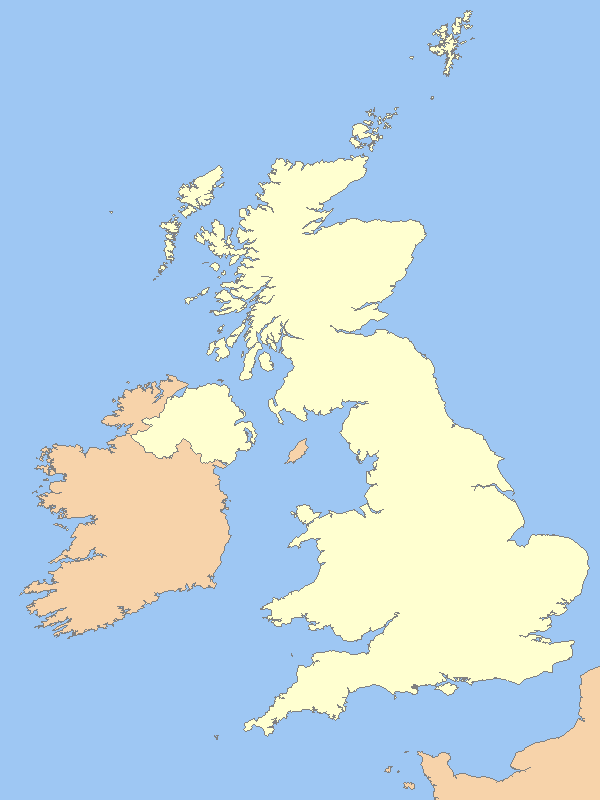
United Kingdom = Great Britain + Northern Ireland


 Photo from www.wikipedia.org

The light yellow part is the United Kingdom


British Isles = United Kingdom + Republic of Ireland

     But the Irish would prefer that you refer to these as the British and Irish Isles.


Photo from maproom.net

Everything pictured here is the British Isles


To read the entirety of Tennyson's poem, "You Ask Me Why, Tho' Ill at Ease", quoted in the title, click HERE.